


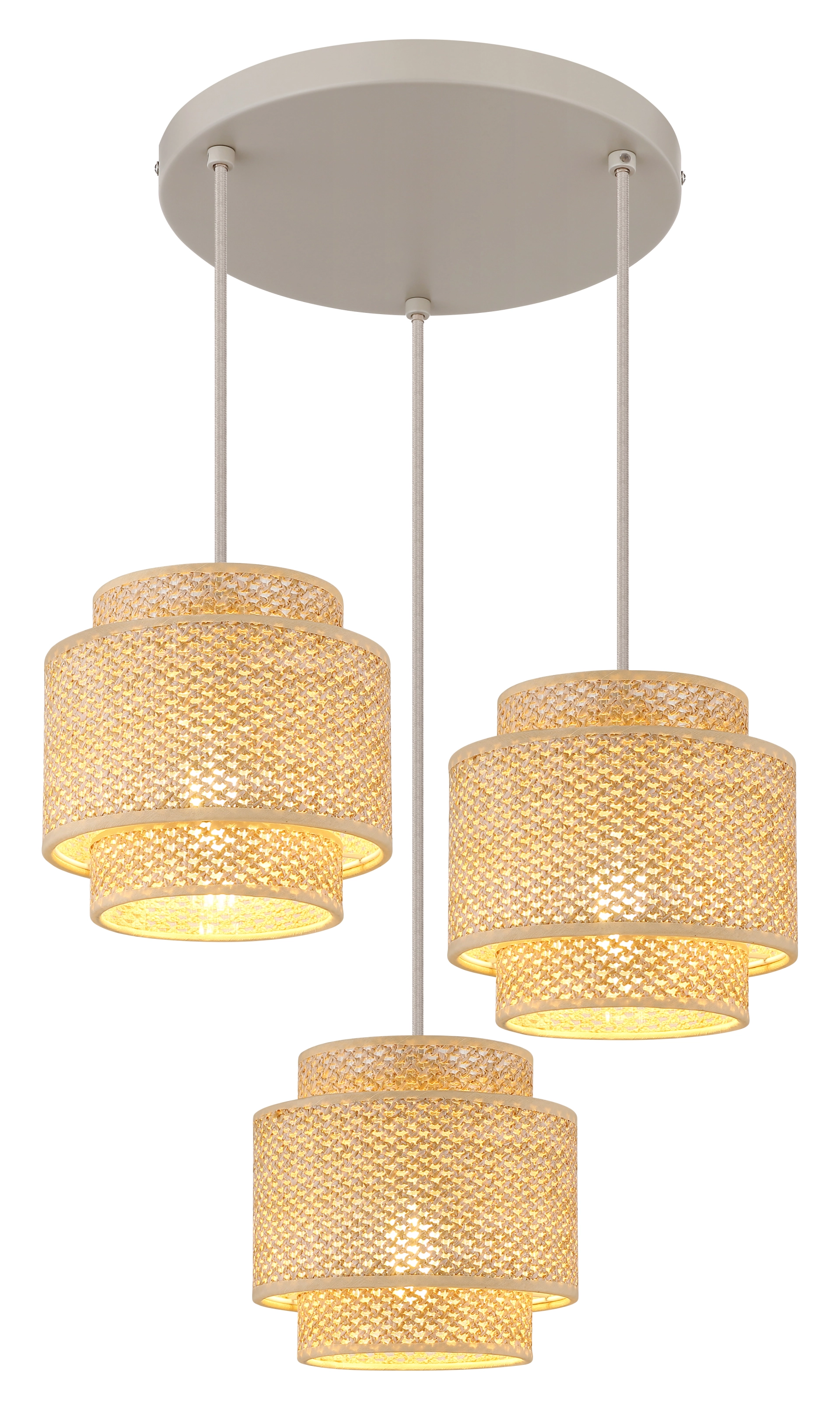


Sand-colored lamps: timeless elegance for your home
Sand-colored lamps bring calm and warmth into a room. The soft beige, cream, and earth tones appear subtle and create a pleasant living atmosphere. They can be used in many ways and integrate harmoniously into different interior styles.
The light appears softer, transitions seem smoother, and the room gains depth. Whether as subtle general lighting or as a targeted accent, sand-colored lamps create an atmosphere that feels cozy and balanced.
Trend color sand
The color world of sand starts with warm cream and extends through classic natural tones to slightly earthy nuances. As a result, these shades appear significantly softer than white and less cool than gray.
In a room, sand-colored lights provide a calm, balanced base. They do not push themselves into the foreground and can still be used purposefully to visually structure areas. Especially with lamps, this creates a connection between function and design that does not overload the room, but complements it.
The advantages of sand-colored lamps at a glance
The calm coloring of sand tones does not dominate and ensures that the room appears harmonious overall. Different color nuances can be combined, for example with wood, stone, textiles, as well as with light and dark furniture.
In combination with warm white light, a soft, cozy atmosphere is created without harsh contrasts. This makes rooms appear more balanced and pleasant. Even with changing interior trends, the color world of sand remains a reliable choice because it can be flexibly integrated into different living concepts.
Sand-colored lamps for every area of use
Sand-colored lamps are available in many designs for every room. Sand tones appear particularly high-quality in bright living spaces, in dining areas, or in the bedroom when the light is deliberately combined with warm materials and clear shapes. In very dark rooms or with many similar beige tones, however, the color can quickly appear too subtle. In this case, contrasts help, for example through dark metal, wood, or a striking lamp shape. Depending on placement and desired lighting effect, different types of lamps are suitable.
Ceiling lights: For calm general lighting in a room, sand-colored ceiling lights are a good solution. They appear softer than white models and create an even lighting base that integrates unobtrusively into the room.
Pendant lights: Above the dining table or kitchen island, sand-colored pendant lights come into their own particularly well. They set a clear point of light and bring more calm into the room through their warm color effect.
Floor lamps: Sand-colored floor lamps create islands of light in living areas. Placed next to sofas or armchairs, they provide pleasant lighting and support a relaxed atmosphere.
Wall and spot lights: With sand-colored wall lights, individual areas can be highlighted in a targeted way. The subtle coloring ensures that the light is effective without the lamp itself appearing dominant.
Table lamps: Sand-colored table lamps provide pleasant additional light on bedside tables, sideboards, or shelves. Due to their restrained coloring, they blend calmly into the room while still setting subtle accents.
The right lighting effect: what you should pay attention to
With the right settings and functions, the effect of sand-colored lamps can be controlled specifically.
Warm white light emphasizes the color effect: A light color of around 2,700 to 3,000 Kelvin suits sand tones particularly well. The warm nuances come into their own better and the light appears softer and more harmonious.
Dimmable models support a calm atmosphere: With dimmable lamps, the light intensity can be adjusted flexibly. Especially with subtle sand tones, dimmed light appears particularly pleasant.
LED technology influences the overall effect: Whether integrated or replaceable light source, the decisive factor is the light quality. The even light of LEDs supports the calm effect of sand-colored surfaces.
Soft light distribution instead of harsh contrasts: Sand-colored materials work best when the light is evenly diffused—for example through indirect lighting. This creates soft transitions and a balanced lighting mood in the room.
How to combine sand-colored lamps correctly
Sand-colored lamps can be combined in many ways and look particularly harmonious in combination with natural materials. Wood, stone, or textiles in natural tones pick up the warm color world and create a calm overall look. To prevent the room from appearing too beige or monotonous, wall colors should be deliberately coordinated. Light walls in white or warm gray make sand-colored lights appear clearer, while too many similar beige tones can quickly seem arbitrary.
Tone-on-tone concepts also work well. Different beige and earth tones can be combined without making the room appear restless. This creates a harmonious design that remains deliberately understated.
Sand-colored lights can remain subtly in the background or be deliberately used as an eye-catcher. Size, shape, and placement are decisive. A simple ceiling light appears restrained, while a striking pendant light above the dining table is perceived more strongly as a design element.
If you want to create contrasts deliberately, you can combine sand-colored lamps with darker materials. Elements in black or dark metal create clear lines, while the light coloring of the lamps provides balance.
The shape also determines whether sand-colored lights appear modern or rather classic. Clear lines, reduced silhouettes, and geometric shapes make sand tones appear contemporary. Playful shapes, many details, or strongly decorative elements, on the other hand, can appear more traditional more quickly.
If several sand-colored lights are used in one room, not every model should look the same. Different heights, shapes, or materials provide variety and prevent the design from appearing too uniform.
FAQ: Frequently asked questions about sand-colored lamps
Do sand-colored and beige lamps match every interior style?
Due to their restrained coloring, sand-colored and beige lamps can be integrated into many living styles. They do not appear too dominant and match both modern and natural interior concepts.
Which light color suits sand-colored lamps best?
Warm white light between 2700 and 3000 Kelvin harmonizes particularly well with sand tones. It emphasizes the warm effect of the color and ensures a pleasant lighting mood.
Do sand-colored lamps appear more warm or neutral?
Sand-colored lamps generally appear warm, but remain subtle. They bring calm into the room without going strongly in a specific direction.
Are sand-colored lamps timeless?
The color world around sand tones is used in both modern and classic interiors and therefore remains relevant in the long term.
Which materials combine well with sand-colored and beige lamps?
Wood, natural stone, and textiles in warm tones work particularly well. For stronger contrasts, dark metals or black elements can also be used.